
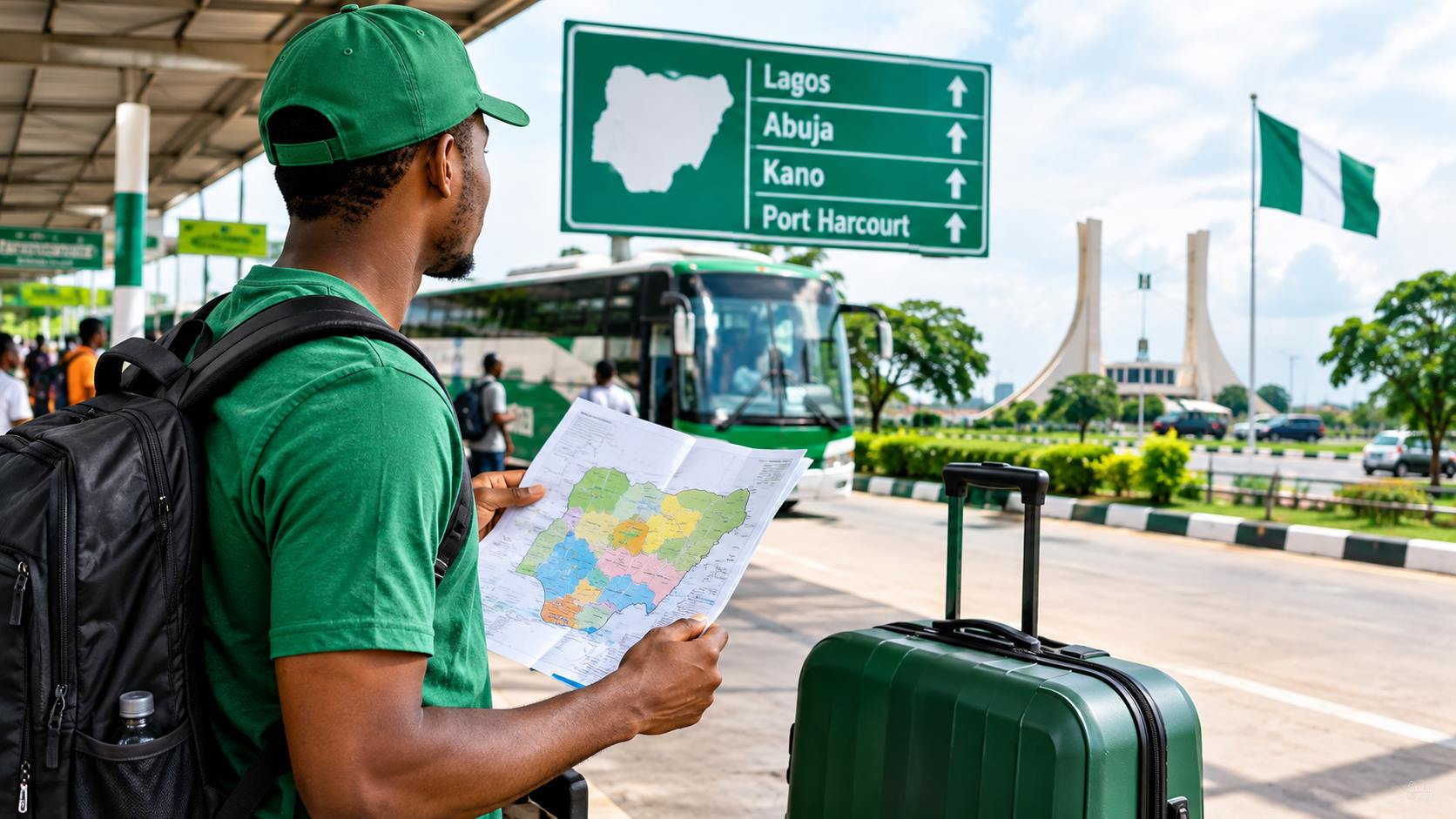
Author: Godwin Samuel – Travel Publisher, Nigerian Traveler and Founder of GreenLink.com.ng
Category: Travel Resources
Suggested Publication Date: October 11, 2026
Last Updated: October 11, 2026
Introduction
Traveling between Nigerian states can introduce you to new people, cultures, food, landscapes and ways of life. However, an enjoyable trip often depends on decisions made before you leave home: which route to take, how to get there, how much money to carry, where to stay and what to do if your plans change.
My interest in travel started when I was younger. At 16, I travelled with my mother, and by 18, I had begun exploring independently. One of my early major solo journeys was a road trip from Bayelsa State to Imo State for a Hero Drink Show. The journey took approximately four to five hours, and I was eager to experience a place beyond my familiar surroundings.
That trip helped me appreciate how much there is to learn from travelling within Nigeria. I noticed differences in the landscape, language, culture and everyday life. Over time, my journeys across different Nigerian states also taught me that excitement alone is not enough. Preparation, flexibility and attention to practical details matter.
In this guide, I’ll share lessons from my travel experiences alongside a practical planning method you can adapt to your destination. Travel conditions, transport fares, accommodation prices and security situations can change, so always verify current information before setting out.
READ: How to Choose a Hotel for a Family Trip in Nigeria: A Practical Guide From My Travel Experience
Key Takeaways
- Research your destination, route and current travel conditions before departure.
- Compare transport options using total cost, convenience, safety arrangements and arrival time—not price alone.
- Budget for transport, accommodation, food, local movement, communication and unexpected expenses.
- Confirm accommodation details directly before travelling, particularly if you will arrive late.
- Keep your phone charged, carry essential documents and maintain access to emergency funds.
- Allow extra time for traffic, vehicle problems, weather and other delays.
- Respect local customs and ask reliable local contacts when you are unsure.
- Treat personal travel stories as experience, not proof that a route or destination is currently safe.
Table of Contents
- Research Your Destination Before Leaving
- Check Current Travel and Security Conditions
- Choose the Right Transport Option
- Plan Your Route and Departure Time
- Prepare a Realistic Travel Budget
- Arrange Accommodation Before Arrival
- Prepare Your Phone, Documents and Money
- Pack for the Journey
- Plan for Delays and Unexpected Problems
- Stay Connected Without Depending on One Phone
- Respect Local Culture and Understand Your Surroundings
- What to Do When You Arrive
- A Practical Example: Planning an Interstate Trip
- Common Interstate Travel Mistakes to Avoid
- A Pre-Departure Checklist
- Frequently Asked Questions
- Final Thoughts
- About the Author
1. Research Your Destination Before Leaving
Before travelling to another state, learn enough about the destination to make informed decisions. Knowing the name of the city is not enough. You should understand where you are going, why you are going there, how you will reach your final destination and what you may need after arrival.
When I travelled from Bayelsa to Imo State for the Hero Drink Show, I was interested in the journey as well as the event. Experiencing a different environment helped me understand that travelling is also an opportunity to learn how people live, communicate and move around.
That curiosity is useful, but practical research should come first.
What should you research?
The exact destination: Confirm the town, city, neighbourhood or venue. Two places in the same state can be far apart, and reaching the state capital does not necessarily mean you have arrived at your final destination.
Your reason for travelling: A business trip may require punctual arrival and reliable communication. A family visit may require flexible timing, while a leisure trip may allow more freedom in your schedule.
Your arrival arrangements: Find out how you will travel from the motor park, airport or drop-off point to your hotel, family home or event venue.
Local movement: Ask how people commonly move around your destination and whether your accommodation is close enough to the places you need to visit.
Practical needs: Consider food, cash access, mobile network coverage, medical needs and accommodation availability.
READ: How to Choose a Hotel When Traveling Alone
My practical advice
Write down the full destination address and the phone number of someone who can help you if you become confused. Save the address offline or take a screenshot so you can access it when mobile data is unavailable.
Do not assume that because you know someone in a state, they will automatically be available to help when you arrive. Confirm your arrangements beforehand.
2. Check Current Travel and Security Conditions
A route that someone used successfully last month may have different conditions today. Road repairs, traffic, flooding, demonstrations, security incidents and transport disruptions can affect travel plans.
I have experienced the uncertainty that can come with road travel, including situations involving vehicle trouble and being stranded. Such experiences reinforced the importance of preparing for things that may not go according to plan.
However, a previous journey cannot establish that a route is safe today. Current information matters.
How to check before travelling
- Review recent official travel or security advisories relevant to your destination and route.
- Check for credible local reporting about significant disruptions.
- Contact your transport operator to ask about current departures and route arrangements.
- Ask a trusted person familiar with the area about practical local conditions, then cross-check important safety information.
- Check weather forecasts and consider whether heavy rain or flooding could affect your route.
- Identify an alternative plan if the journey becomes impractical.
For higher-risk journeys, do not rely on social media rumours or a single person’s assurance. Look for recent, credible information from more than one source where possible.
If official advice warns against travelling to a particular area, take that warning seriously. Consider postponing the trip or choosing a safer alternative.
Important: This article is a general planning guide, not a live security assessment of every Nigerian state or road. Verify current conditions close to your departure date and again if there is a significant delay.
READ: What Makes a Hotel Comfortable for a Long Stay? A Practical Guide From My Travel Experience
3. Choose the Right Transport Option
Your transport choice affects your budget, comfort, arrival time and flexibility. The best option depends on your destination, the purpose of the journey, your budget, your luggage and the current conditions.
Common options for interstate travel in Nigeria
| Transport option | May suit | What to check |
|---|---|---|
| Commercial bus or minibus | Travellers seeking an established intercity service | Departure point, operator, fare, luggage rules, stops and arrival arrangements |
| Private car | Travellers who need more control over timing and stops | Vehicle condition, driver fitness, fuel, route, parking and backup plans |
| Train, where available | Travellers whose destinations are served by a suitable rail route | Current service, ticket availability, station location and onward transport |
| Domestic flight, where available | Longer journeys or trips where time is especially important | Total ticket cost, baggage allowance, airport transfers, schedule and disruption policies |
| Shared private vehicle | Travellers who have verified a suitable arrangement | Driver identity, vehicle condition, passenger arrangements, route and cost |
Availability differs by route, and not every transport option operates between every pair of destinations.
Compare the full cost, not just the ticket price
A cheaper ticket may not be the least expensive choice overall. You might still need to pay for transport to the departure point, luggage, food, a late arrival, local transfers or an extra night in a hotel.
For example, compare these two hypothetical options:
- Option A: A lower-priced bus fare, but the departure point is far from home and the arrival time may require paid transport to your accommodation.
- Option B: A higher-priced direct service that leaves from a more convenient location and arrives at a time when your planned onward transport is available.
Option A may still be better for your budget, but only after you account for the additional costs and practical arrangements.
Questions to ask before paying
- What is the full fare, and are there additional charges?
- Where exactly is the departure point?
- What time is departure scheduled, and how early should I arrive?
- Where will passengers be dropped off?
- What luggage can I bring?
- What happens if the departure is delayed or cancelled?
- How can I confirm the operator’s identity and booking?
Use established, identifiable operators where possible. Avoid accepting an unfamiliar transport arrangement simply because the fare is attractive.
4. Plan Your Route and Departure Time
A route is more than the road between two states. It includes the journey from your home to the departure point, the main interstate journey, stops along the way and the final movement to your destination.
When planning, calculate the complete journey rather than looking only at the time spent on the main road.
READ: How to Check a Hotel’s Location Before Booking: A Practical Guide From My Travel Experience
Build a simple route plan
Record the following information:
- Starting point and departure address.
- Main destination and exact arrival address.
- Transport operator or driver details.
- Scheduled departure and estimated arrival.
- Planned stops, if known.
- Contact person at your destination.
- Alternative arrangements if you arrive late or miss a connection.
Navigation apps can help you understand routes and estimate journey times, but their estimates are not guarantees. Traffic, road conditions, diversions and local circumstances can change during the trip.
If you are unfamiliar with the route, allow a reasonable time buffer. Avoid making an important appointment depend on arriving at the exact time predicted by a navigation app.
Should you travel at night?
There is no single answer for every route. The decision should account for current security advice, the transport operator, your familiarity with the route, the availability of help and the time you will reach your final destination.
I try to avoid overnight road travel where possible. For my own planning, I prefer arrangements that reduce uncertainty and give me a better chance of reaching my destination before late-night onward movement becomes necessary.
If an overnight journey cannot be avoided, check the latest conditions, choose a reliable operator, share your itinerary with someone you trust and confirm how you will get from the arrival point to your accommodation.
Do not assume that a daytime trip is automatically safe or that every night journey is unsafe. Assess the specific circumstances and current advice.
READ: Why Hotel Location Matters When Planning a Trip: Lessons From My Travel Experience
5. Prepare a Realistic Travel Budget
A travel budget should cover more than the transport fare and hotel room. It should account for the expenses that occur before, during and after the main journey.
My approach to preparation includes thinking about money, food, communication and accommodation before departure. I also prefer to avoid relying on a single source of funds when practical alternatives are available.
Expenses to include
| Expense | What to consider |
|---|---|
| Main transport | Return fare or the cost of each leg of the journey |
| Local transport | Movement between home, departure point, accommodation and activity locations |
| Accommodation | Room cost, number of nights, taxes or other applicable charges |
| Food and water | Meals during the journey and at your destination |
| Communication | Airtime, mobile data and essential calls |
| Activities | Event tickets, entrance fees or planned activities |
| Luggage and incidentals | Applicable baggage charges and small necessary purchases |
| Contingency | Money reserved for reasonable unexpected expenses |
An illustrative budget
The figures below are a mathematical example, not a statement of current Nigerian prices or a quotation for any particular route or hotel.
READ: Hotel Parking in Nigeria: What Travelers Should Consider Before Booking
| Expense | Illustrative amount |
|---|---|
| Return interstate transport | ₦45,000 |
| Accommodation for three nights | ₦75,000 |
| Food and water | ₦24,000 |
| Local transport | ₦15,000 |
| Activities and other expenses | ₦10,000 |
| Airtime and data | ₦5,000 |
| Estimated subtotal | ₦174,000 |
| Illustrative 20% contingency | ₦34,800 |
| Illustrative planning target | ₦208,800 |
Before using this budget for a real trip, replace every estimate with current fares, accommodation quotations and your actual plans. The contingency percentage is a planning example, not a guarantee that the reserve will cover every emergency.
A better way to budget
- Obtain current transport prices for your travel dates.
- Confirm the full accommodation cost for the correct number of guests and nights.
- Estimate local transport and meals realistically.
- Add communication, activities and any required fees.
- Set aside a contingency based on your circumstances and the risks of the journey.
- Keep essential emergency money separate from your everyday spending where possible.
Do not spend your entire budget on getting to the destination. You still need enough money to move around, eat, communicate and return home or reach your next stop.
READ: Hotel Wi-Fi and Mobile Network: What Travelers Should Check Before Booking
6. Arrange Accommodation Before Arrival
Accommodation can influence how comfortable and convenient your trip becomes. A room may look attractive in photographs, but its location, facilities, water supply, cleanliness and total price still need to meet your needs.
Having visited and stayed in hotels across several Nigerian states, I have learned that the details that matter most are not always the ones that look impressive in promotional photographs.
For example, during a past three-day stay at Nickton Hotel in Bayelsa State, I appreciated the friendly staff, electricity, parking, security arrangements and peaceful environment. However, the water quality and bathroom smell did not meet my expectations, and the room was smaller than I would have preferred. The room I used had a fan rather than air conditioning.
That experience is a recollection of a past stay, not a report on the hotel’s current condition. Facilities, prices, management and service can change.
The broader lesson is that accommodation decisions should be based on your actual needs, not appearance alone.
READ: Hotel Cleanliness: What to Look for When Choosing Accommodation
What to confirm before booking
- Location: Is the property close enough to your main destination?
- Total price: What will you pay for your dates, room type and number of guests?
- Water: Can the property explain its water arrangements if this is important to you?
- Power: What electricity and backup arrangements are available?
- Cooling: Does the room have air conditioning or a fan, according to your needs?
- Cleanliness: Are there recent, credible reviews discussing room and bathroom hygiene?
- Internet and mobile network: Can the property confirm available connectivity, and have you checked whether your network works in that area?
- Parking and security: If driving, confirm parking availability and ask about the property’s security arrangements without assuming that any arrangement guarantees safety.
- Food: Is food available on-site, nearby or through another reliable arrangement?
- Booking terms: What are the check-in and check-out times, payment terms and cancellation conditions?
Confirm important details directly with the accommodation provider. Keep your booking confirmation and payment evidence. Be cautious if someone pressures you to transfer money to an unverified personal account or refuses to provide clear booking details.
Publishing note: Replace these temporary homepage links with the exact published article URLs before publication.
READ: Questions to Ask a Hotel Before Making a Reservation
7. Prepare Your Phone, Documents and Money
A working phone can help you contact your transport operator, locate your accommodation, communicate with family and respond to unexpected changes. However, your plan should not depend entirely on having constant internet access.
Before leaving:
- Charge your phone and power bank.
- Save important addresses, booking confirmations and contact numbers offline.
- Keep essential travel documents accessible.
- Make sure you have sufficient airtime and mobile data for your needs.
- Check that your payment methods will work at your destination.
- Keep some cash available for situations where electronic payment is unavailable.
- Store backup copies of important information separately from the original documents.
- Share your itinerary with someone you trust.
For international travel, check the applicable passport, visa, entry and other requirements with the relevant official authorities. For domestic travel, carry suitable identification and any documents required for your particular journey or booking.
Avoid sharing sensitive personal information with strangers or leaving your phone, wallet or documents unattended.
8. Pack for the Journey
Packing should reflect the length of the trip, the weather, the activities you have planned and the transport you will use.
Overpacking can make movement between transport terminals and accommodation more difficult. Underpacking can leave you without important items when shops are far away or a journey takes longer than expected.
READ: Hotel Photos vs Reality: What Travelers Should Check Before Booking
Practical packing list
Essentials
- Appropriate identification and booking information.
- Phone, charger and power bank.
- Cash and payment cards, where applicable.
- Necessary medication and personal-care items.
- A list of important contacts.
Comfort
- Suitable clothing for the destination and expected weather.
- Comfortable footwear.
- Drinking water and suitable snacks for the journey.
- A light layer of clothing if you expect to need it.
For road trips
- A charged phone with the destination saved.
- Details of your transport operator or driver.
- Any personal items you need to remain comfortable during stops or delays.
- If driving yourself, appropriate vehicle documents and a properly maintained vehicle.
Keep valuables and essential documents where you can access them securely. If your luggage is separated from you during transit, you should still have access to the information and items needed to manage the journey.
READ: What to Do When Your Hotel Experience Is Different From What You Expected
9. Plan for Delays and Unexpected Problems
Interstate travel does not always follow the original timetable. Traffic, mechanical faults, weather, missed connections, transport cancellations and other disruptions may affect your journey.
I have experienced the inconvenience of vehicle trouble and being stranded. These situations are a reminder that preparation is not only about making a plan; it is also about deciding what you will do when the plan changes.
Create a backup plan
If the vehicle breaks down: Follow the transport operator’s safety instructions, communicate with your contact and avoid accepting help from people or arrangements you cannot reasonably verify.
If your departure is delayed: Ask the operator for an updated departure time and whether the delay affects your arrival or onward transport.
If you arrive later than expected: Contact your accommodation or host. Confirm that your booking remains valid and ask about the safest practical way to reach the property.
If your phone battery becomes low: Preserve power for essential communication, use offline information where possible and charge your phone when you can do so safely.
If you cannot continue the journey: Contact the operator and a trusted person, then look for a safe, verified place to wait. Avoid making a rushed decision simply because you are tired or under pressure.
If you feel unsafe: Prioritise moving to a safer, appropriate location where possible and contact relevant local authorities or emergency services when necessary.
Do not treat an emergency fund as a substitute for sound decisions. Its purpose is to give you more options when reasonable, foreseeable problems arise.
READ: Nigeria Travel Guide for First-Time Travelers: Practical Tips From My Experience
10. Stay Connected Without Depending on One Phone
Communication is an important part of my travel preparation. I have travelled with two phones and three SIM cards because I do not want a single device or network problem to leave me completely disconnected.
That is my personal approach, not a requirement for every traveller. Your own needs may be different depending on your route, phone access, budget and network coverage.
A practical minimum is to:
- Save important contacts in more than one accessible place.
- Keep your phone charged and carry a suitable power bank.
- Check network coverage for your destination where possible.
- Share your route and expected arrival time with someone you trust.
- Agree on a simple check-in plan for a longer journey.
- Keep booking details and addresses available offline.
Do not assume that multiple SIM cards guarantee uninterrupted service. Network availability varies by location, and devices can still fail or lose power.
If you are driving, do not use your phone in a way that distracts you from the road. Pull over safely before handling navigation or making calls.
READ: How to Plan a Trip Within Nigeria: A Step-by-Step Guide
11. Respect Local Culture and Understand Your Surroundings
One of the benefits of travelling around Nigeria is experiencing how different communities speak, eat, dress, work and interact.
My journeys have encouraged me to pay attention to local languages, landscapes, food and everyday life. On my early trip to Imo State, for example, noticing differences from the environment I knew in Bayelsa made the journey more memorable.
These observations are part of why I enjoy travelling: a destination is more than a place on a map.
How to travel respectfully
- Learn the correct name and pronunciation of your destination where possible.
- Ask politely before photographing people or private property.
- Respect local customs, religious practices and community rules.
- Avoid assuming that everyone in a state shares the same beliefs or habits.
- Ask questions when you are unsure rather than presenting assumptions as facts.
- Be considerate of residents, service workers and other travellers.
- Follow instructions at restricted, sensitive or private locations.
A friendly attitude can make it easier to ask for directions or understand local routines. Still, remain sensible about personal boundaries and avoid disclosing unnecessary private information to strangers.
READ: What to Pack for a Trip Within Nigeria: A Practical Guide From My Travel Experience
12. What to Do When You Arrive
Reaching the destination is not the end of the planning process. The first few decisions after arrival can affect the rest of your trip.
Before leaving the arrival terminal or motor park, confirm that you know where you are and how you will reach your final destination. If you are meeting someone, confirm the meeting point rather than relying on a vague description.
Arrival checklist
- Confirm your location and the next leg of your journey.
- Contact your host or accommodation provider if necessary.
- Use a transport arrangement you can reasonably verify.
- Keep your phone, luggage and valuables secure.
- Check in and confirm the room or accommodation details.
- Identify nearby essential services you may need.
- Let your trusted contact know you have arrived.
If you have arrived late, tired or in an unfamiliar area, avoid making unnecessary detours. Prioritise reaching your confirmed accommodation or another suitable destination before exploring.
Once settled, you can ask reliable local contacts about food, transport and places to visit. Verify opening times, costs and access conditions before travelling to a particular attraction.
READ: How to Prepare for a Long Road Trip in Nigeria: A Practical Guide From My Travel Experience
13. A Practical Example: Planning an Interstate Trip
Imagine you live in Yenagoa, Bayelsa State, and need to travel to another Nigerian state for a two-day event. This is a hypothetical planning example, not a report of a current route assessment or a quotation for transport.
Here is how I would organise the trip.
Step 1: Confirm the event details
I would confirm the venue’s full address, the event start time, the expected finish time and whether I need to arrive the previous day.
If the event starts early in the morning, arriving on the same day may introduce unnecessary uncertainty. I would compare the cost of travelling earlier and staying overnight with the risk and expense of a delayed arrival.
Step 2: Compare transport options
I would check which transport services are available for the route and my travel date. For each option, I would record the fare, departure point, expected arrival time, luggage arrangements and final transfer cost.
I would not select an option solely because it has the lowest advertised fare.
Step 3: Confirm accommodation
I would look for a place that fits my budget and is reasonably convenient for the venue. Before paying, I would confirm the total cost, room facilities, location, check-in arrangements and booking terms.
If I planned to arrive late, I would confirm that the accommodation could receive me at that time.
Step 4: Calculate the complete budget
I would estimate transport, accommodation, food, local movement, communication and other planned expenses. I would then set aside a reasonable contingency.
If the trip required a return journey, I would budget for that before committing the money to other activities.
Step 5: Prepare for disruptions
I would save the destination address, booking confirmation and important contacts offline. I would charge my phone and power bank, arrange a check-in with someone I trust and think through what I would do if my transport were delayed.
Step 6: Review the plan before departure
I would recheck the transport arrangements, weather and any relevant current travel advisories. If conditions had changed significantly, I would reconsider the departure time or whether the journey should proceed.
What this example teaches
A successful travel plan connects all the parts of the journey. Transport, accommodation, budget, timing and safety arrangements should support one another.
A low fare is not much help if it causes you to miss an important event. A well-priced hotel may not be suitable if it is too far from your destination. And a detailed itinerary is not enough if you have no plan for delays.
The goal is not to eliminate every possible problem. It is to make informed decisions and give yourself reasonable alternatives.
READ: How to Plan Your Accommodation Before Traveling: A Practical Guide for Nigerian Travellers
14. Common Interstate Travel Mistakes to Avoid
Mistake 1: Planning only the main journey
Travellers sometimes calculate the bus or flight fare but forget the cost of reaching the departure point and travelling from the arrival point to the final destination.
Better approach: Budget for the complete journey from door to door.
Mistake 2: Relying on old information
Transport schedules, prices, road conditions and accommodation facilities can change.
Better approach: Confirm important details close to your departure date.
Mistake 3: Booking accommodation without checking the details
A property’s photographs may not answer questions about water, power, room type, parking or cancellation terms.
Better approach: Ask specific questions and retain written confirmation of important arrangements.
Mistake 4: Leaving no money for unexpected expenses
Using the entire travel budget on transport and accommodation can leave you with few options when plans change.
Better approach: Include a contingency and keep access to essential funds.
Mistake 5: Depending entirely on mobile internet
A weak signal, exhausted battery or network problem can make online maps and messages inaccessible.
Better approach: Save key details offline, keep your phone charged and share your itinerary in advance.
Mistake 6: Ignoring current travel conditions
A friend’s previous journey does not prove that the same route is appropriate today.
Better approach: Review current, credible information and take relevant warnings seriously.
Mistake 7: Making tight arrival plans
Assuming every journey will take exactly as long as expected can cause missed appointments and accommodation problems.
Better approach: Allow a reasonable buffer and communicate if your arrival time changes.
Mistake 8: Failing to confirm the final destination
Arriving in the correct state or city does not necessarily mean you are near the venue or accommodation.
Better approach: Save the complete address and plan the final transfer.
Mistake 9: Assuming every local recommendation is reliable
A recommendation may be outdated, based on a different budget or unsuitable for your circumstances.
Better approach: Use local advice as one source of information and independently confirm important details.
READ: How to Create a Practical Travel Budget for Nigeria
15. A Pre-Departure Checklist
Use this checklist before setting out on your next interstate journey.
-
I have confirmed my destination and exact address.
-
I have checked relevant current travel and security information.
-
I have selected and verified my transport arrangement.
-
I know the departure point, scheduled time and arrival arrangements.
-
I have estimated the full journey cost.
-
I have allowed for unexpected expenses.
-
I have confirmed my accommodation and booking terms.
-
I have saved my itinerary and important contacts.
-
My phone is charged, and I have a suitable charging plan.
-
I have packed necessary documents, medication and personal items.
-
Someone I trust knows my itinerary and expected arrival time.
-
I have a practical plan for delays or disruptions.
If several important items remain unresolved, take time to address them before leaving, especially if they affect your safety, ability to reach your destination or access to accommodation.
READ: How to Choose Where to Stay When Visiting a New Nigerian City
16. Frequently Asked Questions
1. What should I do before travelling to another state in Nigeria?
Confirm your destination, transport, accommodation, budget and arrival arrangements. Check current travel conditions, save important contacts and addresses offline, and prepare for reasonable delays.
2. How can I choose the best transport for interstate travel?
Compare available options based on the full cost, journey time, departure location, arrival arrangements, operator reliability, luggage needs and current conditions. The cheapest option is not always the most practical.
3. How much money should I budget for interstate travel in Nigeria?
It depends on your route, dates, transport, accommodation, length of stay and spending needs. Obtain current quotations and calculate transport, accommodation, food, local movement, communication and a contingency rather than relying on a generic figure.
4. Should I book a hotel before travelling to another state?
Booking ahead is often useful when you have a fixed event, a late arrival or limited accommodation options. Confirm the property’s location, total price, room details, check-in arrangements and cancellation terms before paying.
5. Is it better to travel during the day or at night?
It depends on the route, current conditions, transport arrangements and your onward travel plans. Review relevant safety advice and choose an arrangement that minimises avoidable uncertainty. Do not assume that either time is automatically safe.
6. What should I pack for an interstate road trip?
Bring suitable identification and booking details, a charged phone, charger, power bank, payment options, necessary medication, appropriate clothing, water and snacks where practical. Adapt the list to your trip and transport arrangements.
7. How can I prepare for a vehicle breakdown or delay?
Keep your itinerary and important contacts accessible, share your plans with someone you trust, retain emergency funds where possible and follow the transport operator’s safety instructions. If stranded, prioritise a suitable place to wait and seek help through reliable channels.
8. How can I stay connected while travelling?
Charge your phone, carry a power bank, check network availability where possible and save key information offline. You may consider backup communication options based on your needs, but multiple SIM cards do not guarantee uninterrupted service.
9. How do I avoid choosing unsuitable accommodation?
Confirm the exact location, total price, room facilities, cleanliness information, water and power arrangements, connectivity, parking where needed and booking terms. Ask direct questions instead of relying on photographs alone.
10. How can I travel responsibly in a community I have never visited?
Be respectful, learn about local customs, ask permission before photographing people, follow community rules and avoid treating assumptions as facts. Listen to local people while verifying important practical and safety information.
READ: What First-Time Travelers Should Know About Traveling Around Nigeria
Final Thoughts
Travelling between Nigerian states has helped me see how much there is to learn beyond the place where a journey begins. My experiences have taught me to stay curious, observe my surroundings and prepare for practical issues that can affect a trip.
I have also learned that a memorable journey is not necessarily one where everything goes according to plan. Sometimes, the most useful lesson comes from a delay, an unexpected change or a detail I should have checked earlier.
For your next trip, start with the basics: confirm the route, check current conditions, compare transport options, prepare a realistic budget, arrange accommodation and keep essential information accessible. Give yourself room to adapt if something changes.
At GreenLink.com.ng, our aim is to help Nigerian travellers discover accommodation and make better-informed travel decisions. We do not own or operate the hotels featured on the platform. Our goal is to help travellers find options that suit their needs, preferences and budgets.
A little preparation can make an interstate journey easier to manage and help you focus on the reason you travelled in the first place.
About the Author
Godwin Samuel – Travel Publisher, Nigerian Traveler and Founder of GreenLink.com.ng
Godwin Samuel was born in Yenagoa, Bayelsa State, and developed an interest in exploring places beyond his familiar environment from a young age. After travelling with his mother at 16, he began travelling independently at 18. His journeys around Nigeria have introduced him to different communities, landscapes, languages, food and accommodation experiences.
Through GreenLink.com.ng, Godwin shares practical travel information and hotel-discovery guidance to help people make more informed decisions when planning trips in Nigeria.
READ: How to Prepare for Traveling Alone in Nigeria: A Practical Guide From My Travel Experience
Editorial Note
This article combines the author’s stated personal travel experiences with general planning guidance. Personal experiences reflect the circumstances of those journeys and should not be interpreted as current assessments of every route, transport operator or accommodation provider.
Travel conditions, transport fares, hotel prices, facilities and local requirements can change. Readers should independently confirm current information with relevant operators, accommodation providers and official sources before making travel decisions.
GreenLink.com.ng is an independent hotel discovery platform. It does not own or operate the hotels featured on the website. Any future commercial relationships or paid placements should be disclosed clearly in accordance with the site’s advertising and partnership policy.
Leave a Reply