
Author: Godwin Samuel – Travel Publisher, Nigerian Traveler and Founder of GreenLink.com.ng
Category: Hotel Guides
Published Date: 23 October 2026
Last Updated: 23 October 2026
Introduction
Choosing budget accommodation is not only about finding a room at a price you can afford. It is also about understanding what you will share with other guests, how those facilities are maintained, and whether the arrangement suits your travel plans.
READ: Hotels in Plateau State: What Travellers Should Know Before Booking
Imagine arriving at your accommodation after a long road journey. You want to take a bath, charge your phone, eat something and rest. Then you discover that the bathroom is shared with several guests, the kitchen has restricted opening hours, or you need to contact the host before entering the building late at night. These details can affect your stay, even if the room itself looks comfortable.
My own hotel experiences in Nigeria have taught me to look beyond photographs and advertised prices. During a hotel stay in Bayelsa, for example, I appreciated the friendly staff, electricity, parking and peaceful environment, but I also encountered concerns about water quality, bathroom smell and room size. That experience reinforced a practical lesson: a room can have positive features while still having details that matter to your comfort.
That stay was in a hotel, not a firsthand test of every type of shared guesthouse or hostel. In this guide, I use lessons from my accommodation experiences alongside practical questions travellers can ask before booking shared facilities.
The main rule is simple: before paying, confirm exactly what is shared, who can use it, how it is cleaned, when it is accessible and what happens if something goes wrong.
READ: Hotels in Bauchi State: A Practical Accommodation Guide
Key takeaways
- Confirm whether the bathroom is private or shared and how many guests may use it.
- Ask about water supply, cleaning schedules, toilets, showers and working locks.
- Find out whether kitchen equipment, cooking, food storage and cleaning are included.
- Check lounge access hours, visitor rules and quiet hours.
- Understand the key, access-code and late-arrival arrangements.
- Protect your valuables and avoid assuming that a shared space is secure simply because it is inside the property.
- Compare the total cost and practical convenience, not just the advertised nightly rate.
- Keep important booking confirmations and facility arrangements in writing.
Table of contents
- What are shared facilities?
- Shared bathrooms: what to check
- Shared kitchens: rules, equipment and food storage
- Shared lounges and common areas
- Access arrangements and personal security
- Cleaning responsibilities and hygiene
- What to do when a shared facility is unsuitable
- How to decide whether shared accommodation is worth it
- Booking message you can copy
- Common mistakes to avoid
- Practical checklist
- Frequently asked questions
1. What are shared facilities?
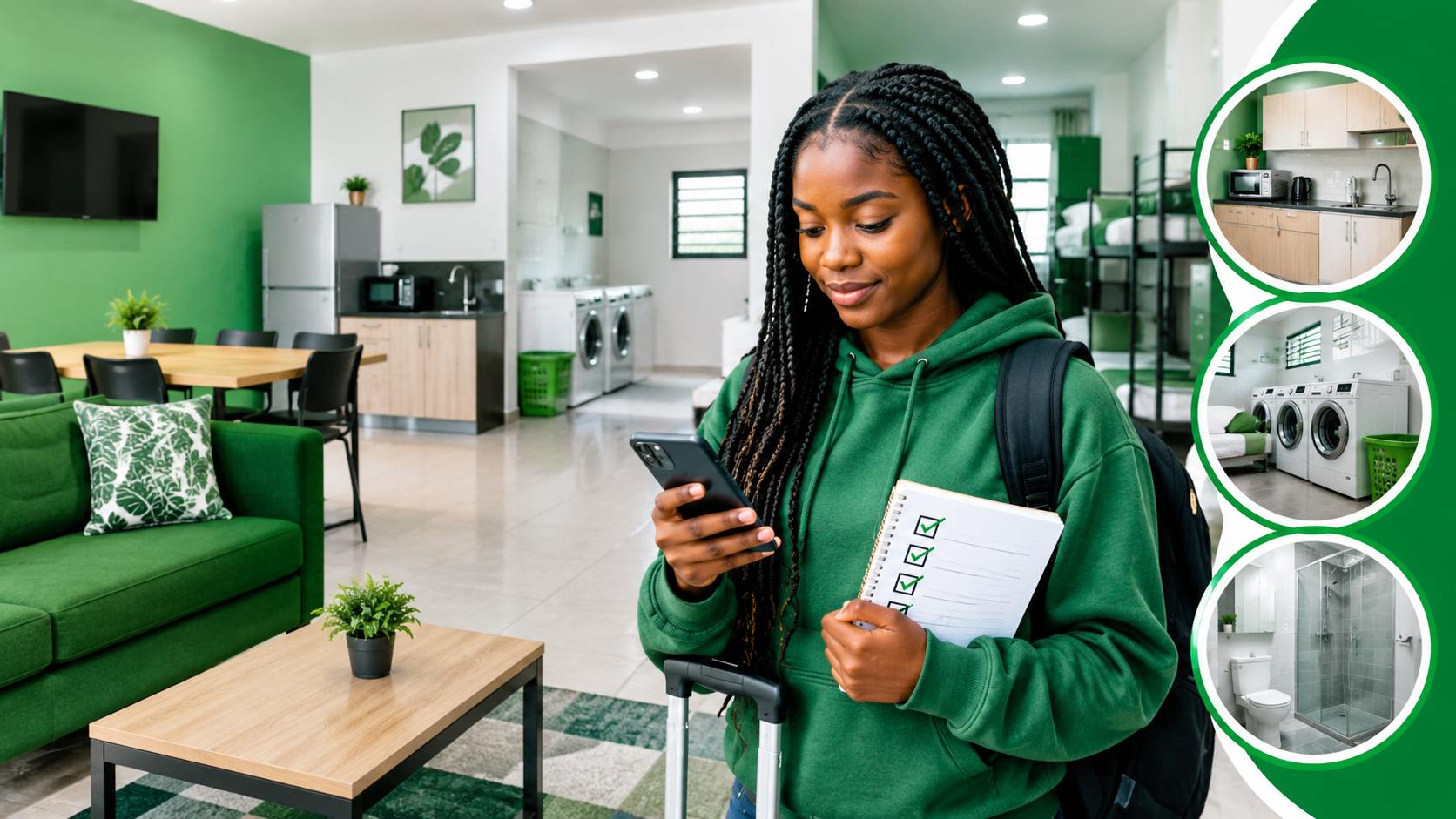
Shared facilities are spaces or amenities used by more than one guest instead of being reserved exclusively for one room or booking.
READ: Hotels in Kwara State: How to Find Suitable Accommodation
Depending on the property, they may include:
- Shared bathrooms: Guests use the same toilet, shower or bathroom area.
- Shared kitchens: Guests may use common cooking equipment, sinks, refrigerators or food-preparation areas.
- Shared lounges: Guests sit, relax, work or socialise in a common living area.
- Shared dining areas: Guests eat meals in a common space.
- Shared entrances and corridors: Several guests use the same access routes.
- Shared laundry areas: Washing machines, drying spaces or washing facilities are available to multiple guests.
A property may offer a private bedroom but shared bathrooms and a kitchen. Another may provide a private bathroom but shared lounges or dining areas. Do not assume that the word private room means every facility is private.
Before booking, ask the accommodation provider to explain which facilities belong exclusively to your room and which are shared.
2. Shared bathrooms: what to check before booking
Bathroom arrangements deserve particular attention because they affect privacy, hygiene, convenience and comfort.
In my hotel experience, water quality and bathroom conditions have affected how comfortable a stay felt. Those experiences are a reminder to ask specific questions rather than assuming that a photograph tells the whole story.
How many guests use the bathroom?
A bathroom shared by two guests may feel very different from one used by several rooms.
Ask the host:
- How many guests are expected to use the bathroom?
- Is there more than one shared bathroom?
- Is the toilet separate from the shower?
- Are bathrooms assigned to particular rooms or available to everyone?
- Are there busy periods when guests may have to wait?
The provider may not know the exact number of guests who will be staying at the same time. Ask for the usual arrangement and whether the property has a maximum occupancy.
Is water reliably available?
Do not stop at asking whether the property has water. Find out what that means in practice.
Useful questions include:
- Is water normally available throughout the day?
- Is there a storage tank or another backup arrangement?
- Is water available for both flushing and bathing?
- Is hot water provided, if you need it?
- What should guests do when the supply is interrupted?
Water arrangements can change, so confirm them close to your arrival date when they are important to your decision.
READ: Hotels in Sokoto State: How to Choose Suitable Accommodation
Is the bathroom clean and functional?
Ask how often shared bathrooms are cleaned and who is responsible for maintaining them. If recent photographs are available, check whether they clearly show the actual bathroom guests will use.
If you can inspect the property before paying, look for:
- A functioning toilet and shower.
- Working taps and adequate drainage.
- A door that closes properly and a lock that works from inside.
- Reasonable ventilation and no strong persistent odour.
- A place to hang clothes and towels.
- A floor that does not remain dangerously slippery.
- A clear arrangement for reporting plumbing or water problems.
Photographs can help, but they cannot prove that a bathroom is currently clean or that water is available.
What about toiletries and towels?
Some properties provide towels, soap and toilet paper; others expect guests to bring their own.
Confirm what is included. If you have sensitive skin or prefer your own toiletries, bring familiar products rather than depending on supplies that have not been confirmed.
READ: Hotels in Yobe State: A Practical Guide to Choosing Accommodation
3. Shared kitchens: rules, equipment and food storage
A shared kitchen can help you manage food costs and make your stay more convenient. However, the word kitchen does not guarantee that every guest can cook whenever they want.
Confirm what you can use
Ask whether the kitchen includes the equipment you need, such as:
- A stove or cooker.
- Pots, pans and basic cooking utensils.
- Plates, cups and cutlery.
- A refrigerator or freezer.
- A sink and dishwashing supplies.
- A kettle or microwave, if relevant to your needs.
Find out whether these items are available to all guests or only by request. Some properties restrict cooking, charge extra for certain equipment or provide a kitchen that is mainly intended for staff.
READ: Hotels Near Nigerian Airports: What Travelers Should Consider
Understand cooking and cleaning rules
Before booking, ask:
- What are the kitchen opening hours?
- Can guests prepare their own meals?
- Are there restrictions on particular cooking methods?
- Must guests wash their dishes immediately?
- Who cleans the counters, sink and cooker?
- Is there a designated area for rubbish?
- Are there additional charges for using the kitchen?
A kitchen can be available but still unsuitable if you need to cook early in the morning or return late at night.
Check how food is stored
If you plan to buy groceries, ask whether refrigerator space is available and whether guests have designated shelves or containers.
Keep your food in clearly labelled, closed containers where appropriate. Do not assume that food left in a common refrigerator will remain untouched. Follow the property’s rules, and avoid leaving perishable food unrefrigerated for extended periods.
For travellers with food allergies or strict dietary needs, confirm whether the kitchen arrangement allows you to prepare meals safely. Do not assume that a shared kitchen is allergen-free.
4. Shared lounges and common areas
A lounge can be useful if you want to relax outside your bedroom, eat, read or work. It may also become noisy or crowded, depending on the number of guests and the property’s rules.
READ: How to Find Accommodation That Matches Your Travel Needs and Budget
Before booking, check:
- Whether the lounge is open all day or closes at a particular time.
- Whether guests may eat or work there.
- Whether Wi-Fi is available in the common area.
- Whether air conditioning, fans or ventilation are provided.
- Whether visitors are allowed.
- Whether there are quiet hours.
- Whether the lounge is used for events or other activities.
If you need to work online, ask about the internet connection and mobile network coverage. Do not rely on a general statement that Wi-Fi is available: the signal may be weak in some rooms or common areas.
If you need quiet to sleep or work, ask how the property handles noise complaints and whether bedrooms are close to the lounge.
5. Access arrangements and personal security
A low room rate is not a good trade-off if you cannot enter the property when you need to or cannot understand how access is controlled.
Ask how you will enter the property
Before paying, confirm:
- Whether you receive a physical key, access card or code.
- Who provides the key or code and when.
- Whether there is a reception desk or a host you must contact.
- What happens if your journey is delayed.
- Whether late-night entry is permitted.
- Who you should contact if you cannot get inside.
- What happens if a key is lost or an access code fails.
This is especially important when travelling by road in Nigeria, where journey times can be unpredictable. If you expect to arrive late, get the late-arrival procedure confirmed in writing before setting off.
Understand visitor and guest rules
Some properties permit visitors only at certain times; others do not allow visitors in bedrooms or anywhere on the premises. Ask before booking if you expect to receive someone.
Also establish whether you can lock your bedroom securely and whether staff or other guests have access to it. A shared entrance does not automatically mean that every guest has unrestricted access to every room, so ask how access is managed.
READ: Hotel Check-In and Check-Out in Nigeria: What First-Time Guests Should Expect
Protect your belongings
Take sensible precautions:
- Keep cash, identification, bank cards, phones and other valuables secure.
- Use a suitable lockable bag or safe where available.
- Do not leave valuables unattended in shared lounges or kitchens.
- Avoid sharing access codes publicly.
- Report lost keys, broken locks or suspicious access promptly.
- Keep emergency contact details and your booking confirmation accessible.
No accommodation arrangement can be assumed completely secure. Ask what protections are provided and decide whether they meet your needs.
6. Cleaning responsibilities and hygiene
One of the most important questions about shared facilities is not simply whether they are cleaned, but who cleans them, how often, and what happens between scheduled cleanings.
Some properties employ cleaners. Others expect guests to tidy up after themselves, particularly in kitchens and lounges. Some use a combination of both.
Ask the provider to explain the arrangement for:
| Facility | What to confirm |
|---|---|
| Bathroom | Cleaning frequency, supplies, waste removal and reporting problems |
| Kitchen | Dishwashing rules, surface cleaning, rubbish disposal and refrigerator hygiene |
| Lounge | Cleaning schedule, food rules and noise expectations |
| Laundry area | Machine access, cleaning and responsibility for removing finished laundry |
| Shared corridors | General maintenance and how hazards are reported |
A rule requiring guests to wash their own dishes does not necessarily mean guests are responsible for every aspect of kitchen hygiene. Ask where guest responsibilities end and the property’s responsibilities begin.
When you arrive, compare the actual conditions with what was promised. If a bathroom is dirty despite a stated cleaning schedule, or a kitchen is unavailable when it was advertised as accessible, contact the host or manager rather than assuming that you must accept the situation.
7. What to do if a shared facility is dirty, unavailable or unsuitable
Even when you ask questions before booking, circumstances may change. A facility may be out of order, cleaning may be delayed, or the actual arrangement may differ from the description.
READ: Hotel Deposits and Refunds in Nigeria: What Guests Should Confirm Before Paying
Use this practical process.
Step 1: Identify the specific problem
Be precise. For example:
- The shared bathroom has no running water.
- The bathroom cannot be locked from inside.
- The kitchen listed in the booking description is unavailable.
- The lounge closes earlier than the confirmed access time.
- The room’s access instructions do not work.
Specific descriptions make it easier for the provider to understand what needs to be fixed.
Step 2: Contact the host or manager promptly
Explain the issue calmly and state what solution you need. Depending on the situation, this may mean cleaning the facility, restoring access, providing an alternative bathroom or explaining a revised arrangement.
For example:
“Hello, I have arrived and found that the shared bathroom has no running water. Water availability was one of the details I confirmed before booking. Please let me know when this will be resolved or whether an alternative bathroom is available.”
Step 3: Keep records
Where appropriate, retain relevant booking messages, receipts and photographs of the problem. Take photographs only where doing so respects other guests’ privacy.
Keep communication factual. Do not publish accusations or personal information about other guests.
Step 4: Check your booking terms
If the provider cannot resolve the issue, review the cancellation, refund and complaint terms. If you booked through a platform, use its official support or dispute process and keep the conversation on the platform where possible.
Do not assume a refund is automatic. The outcome depends on the booking terms, the circumstances and the applicable rules.
READ: How to Understand Hotel Cancellation Policies Before Booking
Step 5: Put immediate safety first
If a lock is broken, someone is entering a private space without permission, or you feel unsafe, contact the property manager and seek a safer arrangement. If there is an immediate threat, move to a safe location and contact the appropriate local emergency service.
Do not remain in an unsafe situation simply because you have already paid.
8. How to decide whether shared accommodation is worth it
Shared facilities may be suitable for some travellers, but not everyone. Consider the type of trip you are taking, your schedule and the level of privacy you need.
| Your situation | What to consider |
|---|---|
| Short overnight stop | Check bathroom access, cleanliness, security and arrival arrangements |
| Several-night stay | Examine cleaning routines, kitchen access, storage and noise |
| Work trip | Confirm Wi-Fi, mobile network, quiet hours and a suitable place to work |
| Family trip | Check occupancy limits, bathroom sharing, privacy and child-safety arrangements |
| Late arrival | Confirm entry instructions and a contact who can assist |
| Special dietary needs | Check kitchen equipment, food storage and whether cooking is permitted |
| Need for privacy | Compare the shared arrangement with a room that has a private bathroom and other essential facilities |
Compare the total cost, not just the nightly price
Before booking, consider the complete cost of the stay. Ask whether there are separate charges for kitchen use, laundry, towels, deposits, extra guests or other facilities.
Then consider indirect costs. If you cannot cook, you may spend more on meals. If the location is inconvenient, transport may add to the total. If the shared bathroom is frequently unavailable when you need it, the lower price may not justify the inconvenience.
The cheapest option is not automatically the best value. Choose the arrangement that meets your actual needs at a cost you can manage.
READ: What to Do If a Hotel Cannot Find Your Reservation on Arrival in Nigeria
9. Booking message you can copy and send
Use this message when contacting a guesthouse, hostel, serviced apartment or other accommodation provider. Edit the dates and questions to suit your needs.
Subject: Questions About Shared Facilities Before Booking
Hello, I am interested in booking your accommodation for [number of nights], from [arrival date] to [departure date].
Before I make payment, please confirm the following:
- Is the bathroom private or shared? If shared, approximately how many guests use it?
- Is the kitchen available to guests, and what equipment is provided?
- Are the lounge and other common areas accessible throughout the day?
- How are shared bathrooms, kitchens and lounges cleaned?
- How will I receive my key or access code, and can I enter if I arrive late?
- Is water available, and what are the electricity arrangements?
- Is there a secure place to keep my belongings?
- What is the total price, including any deposits or additional charges?
- What is your cancellation and refund policy?
Please confirm these details in writing before I complete my booking. Thank you.
Practical tip: Save the response with your booking confirmation. If the provider confirms a specific facility or access arrangement, you will have a written record to refer to if the actual situation differs.
READ: How to Handle a Problem With Your Hotel Room After Check-In
10. Common mistakes to avoid
Assuming a private room means a private bathroom
Always confirm the bathroom arrangement separately. Check whether the toilet and shower are both private or whether one is shared.
Booking based only on photographs
Photos may show a clean kitchen or lounge without explaining the rules, current condition or number of guests using it. Ask specific questions and seek recent images where necessary.
Failing to ask about water
Ask about availability and what happens when supply is interrupted. Water is a basic practical concern, not a minor detail.
Assuming the kitchen is fully equipped
A kitchen may have a sink and refrigerator but no cooker or usable cookware. Confirm the equipment and any restrictions before relying on it.
Ignoring late-arrival arrangements
A long journey can take longer than expected. Confirm whether late entry is possible and how to contact someone if the normal check-in process is unavailable.
Overlooking extra charges
Ask for the total amount payable and whether deposits, cleaning fees or facility charges apply. Do not rely only on a headline nightly price.
Assuming shared spaces are always secure
Keep valuables protected and ask how rooms and common areas are accessed. Do not assume that other guests or staff cannot enter a space unless the provider explains the arrangement.
Paying before essential details are confirmed
If bathroom access, water supply, security or late entry is essential to you, get clear answers before paying. If the provider avoids answering important questions, consider another option.
READ: Hotel House Rules in Nigeria: What Every Guest Should Know Before Staying
11. Practical checklist before you book
Use this checklist to assess whether the accommodation is suitable.
-
I know which facilities are private and which are shared.
-
I understand approximately how many guests use the bathroom.
-
I have confirmed the water arrangements.
-
I know how often shared bathrooms and common areas are cleaned.
-
I understand the kitchen equipment, cooking rules and food-storage arrangements.
-
I know the lounge opening hours and quiet-hour rules.
-
I have confirmed how to enter the property, including if I arrive late.
-
I understand the room-locking arrangements and how to report security concerns.
-
I know what towels, toiletries and other supplies are provided.
-
I have checked Wi-Fi and mobile-network suitability if I need internet access.
-
I know the full price, including deposits and additional charges.
-
I have reviewed the cancellation and refund terms.
-
I have saved the provider’s written answers and booking confirmation.
-
I know who to contact if a facility is unavailable or unsuitable.
If several essential questions remain unanswered, pause before paying. A short conversation beforehand can prevent avoidable frustration later.
READ: Hotel Room Privacy and Personal Belongings: Practical Precautions for Guests
12. Frequently asked questions
1. What does shared accommodation mean?
Shared accommodation is lodging where guests share one or more facilities, such as bathrooms, kitchens, lounges or entrances. Guests may still have private bedrooms. Confirm exactly what is shared before booking.
2. Is a shared bathroom suitable for a short stay?
It can be suitable if you are comfortable sharing, the bathroom is adequately maintained, access is practical and the arrangement meets your privacy needs. Ask about the number of users, cleaning, water and locks.
3. How many guests should share one bathroom?
There is no single number that guarantees comfort in every property. The experience depends on the bathroom’s capacity, guest occupancy, cleaning, water supply and guests’ schedules. Ask for the usual arrangement and decide whether it works for you.
4. Should I bring my own towel and toiletries?
Bring them if the provider has not confirmed that they are supplied, or if you prefer your own. Ask in advance whether towels, soap and toilet paper are included.
5. Can I cook in a shared kitchen?
Only if the property permits it. Confirm opening hours, available equipment, cooking restrictions, cleaning responsibilities and whether any additional fees apply.
6. Who is responsible for cleaning shared facilities?
It depends on the property’s rules. Staff may clean bathrooms and common areas, while guests may be expected to wash their own dishes and tidy up after use. Ask for the exact arrangement rather than assuming.
7. How can I protect my belongings in shared accommodation?
Use a lockable bag or safe where available, keep valuables with you or securely stored, and avoid leaving items unattended in common areas. Ask how bedroom access is controlled.
8. What should I do if the shared bathroom is dirty when I arrive?
Contact the host or manager, describe the condition and request cleaning or another suitable solution. Keep a record of the communication. If the problem remains unresolved, review your booking terms and use the booking platform’s official support process if applicable.
9. What if the shared kitchen or lounge is unavailable?
Ask the provider why it is unavailable and when access will be restored. If the facility was specifically advertised or confirmed as included, keep a record of that promise and check the booking terms if no suitable solution is offered.
10. Is shared accommodation always cheaper than a private room?
Not necessarily. Compare the complete price, extra charges, transport, meals and the facilities you actually need. A private room may offer better value for a particular trip, even if its advertised nightly rate is higher.
11. Should I book if the provider will not answer questions about shared facilities?
If the unanswered questions concern essential needs such as water, bathroom access, security, price or late entry, it is safer to pause and consider alternatives. Clear communication before payment helps you make an informed decision.
12. Is shared accommodation suitable for families?
It can be, depending on the property and the family’s needs. Confirm occupancy limits, bathroom access, sleeping arrangements, visitor rules, noise, security and whether children can safely use the common areas.
READ: How to Communicate Special Requests to a Hotel Before Arrival
Final thoughts
Shared facilities can make accommodation more affordable, but the arrangement needs to be clear before you commit.
My experience travelling and staying in hotels has taught me to pay attention to details that photographs and headline prices do not always reveal. Water, bathroom conditions, electricity, a peaceful environment and responsive staff can all affect the quality of a stay. When facilities are shared, it becomes even more important to understand the rules and responsibilities before arrival.
You do not need to ask every possible question about every property. Focus on the facilities that matter most to your trip, get essential answers in writing, compare the full cost and make sure you know what to do if something goes wrong.
A little preparation before payment can help you arrive with realistic expectations and make a better accommodation decision.
READ: Hotel Laundry Services in Nigeria: What Guests Should Know Before Using Them
About the author
Godwin Samuel is the founder of GreenLink.com.ng, an independent hotel discovery and travel information platform focused on helping Nigerian travellers and people visiting Nigeria discover accommodation options and make informed travel decisions.
His perspective draws on travel across Nigerian states and personal hotel experiences. GreenLink does not own, operate or manage the hotels featured on its platform. Experiences described in this article relate to the author’s own hotel stays; general advice about shared guesthouses, hostels and other accommodation types is presented as practical guidance, not as a claim that the author has personally tested every arrangement.
READ: Hotel, Guesthouse or Serviced Apartment: Which Accommodation Type Is Best for Your Trip in Nigeria?
Editorial note: Accommodation facilities, access rules, prices and cleaning arrangements can change. Confirm important details directly with the provider before paying or travelling.
Leave a Reply