
Author: Godwin Samuel – Travel Publisher, Nigerian Traveler and Founder of GreenLink.com.ng
Category: Travel Resources
Published: 12 October 2026
Last updated: 12 October 2026
Introduction: What Travelling Around Nigeria Has Taught Me
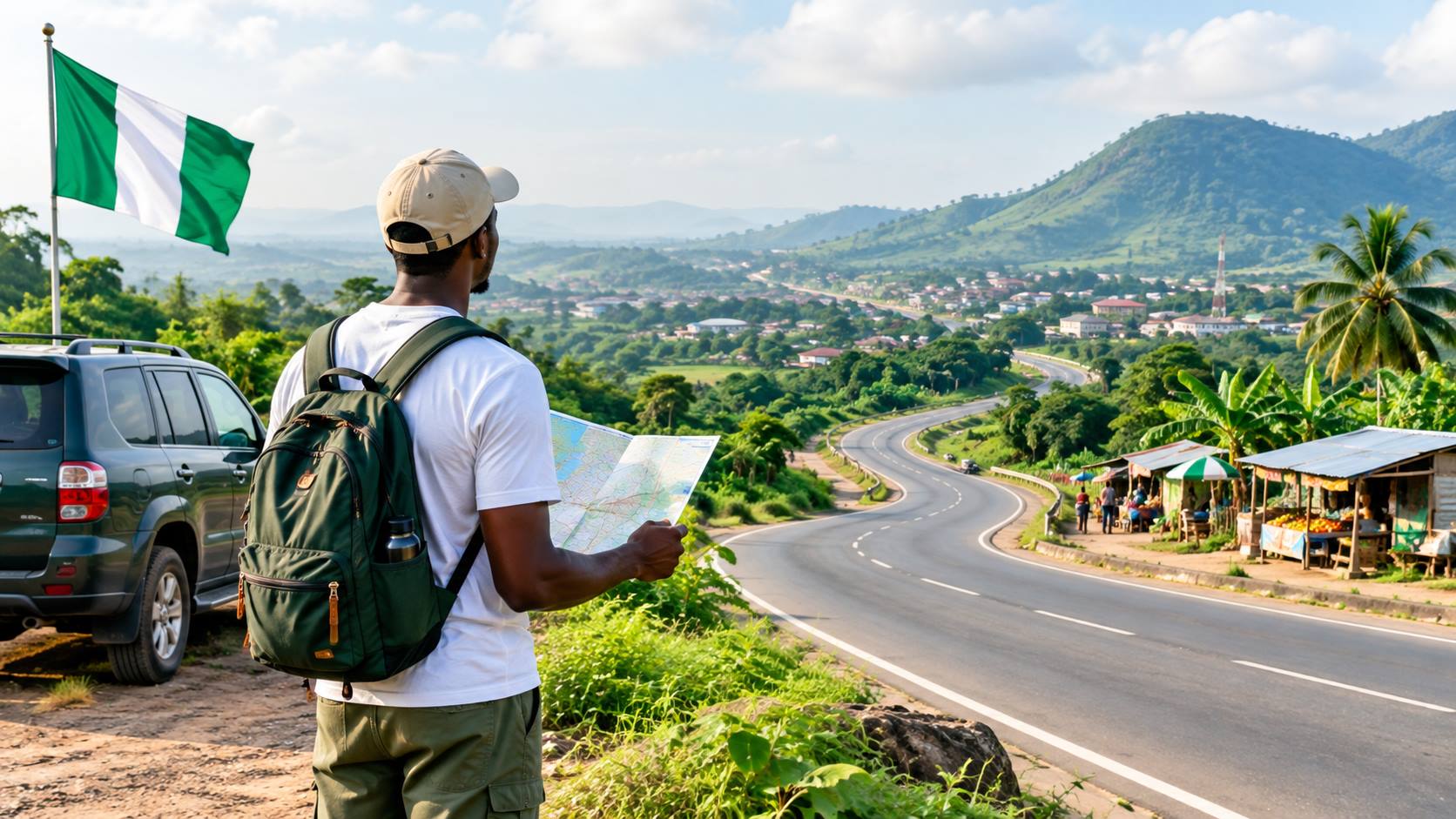
Travelling around Nigeria has taught me lessons that I could not have learned simply by watching travel videos or reading about destinations online. Every journey gives me another opportunity to observe people, experience different environments and understand the practical decisions that can make a trip easier or more difficult.
My interest in travel began early. At 16, I travelled with my mother, and by 18, I wanted to explore more places independently. One of my early solo journeys took me from Bayelsa State to Imo State by road for a Hero Drink Show. The journey took approximately four to five hours, and it gave me an opportunity to experience an environment different from the one I knew at home.
READ: What First-Time Travelers Should Know About Traveling Around Nigeria
Since then, travelling to different parts of Nigeria has helped me appreciate the importance of preparation, observation and flexibility. I have also learned that being Nigerian does not automatically mean knowing every destination, understanding every local custom or knowing which accommodation will suit a particular journey.
Some lessons came from enjoyable experiences. Others came from things that did not meet my expectations or situations that made me stop and think before acting.
In this guide, I share practical lessons from my travels, including what my experiences have taught me about planning journeys, choosing hotels, managing money, communicating, understanding local cultures and making better decisions in unfamiliar places.
These are personal reflections, not claims that I have experienced every situation described. Where I offer general advice, I explain how you can apply it to your own journey.
Key Takeaways
- Research your destination and route before setting out.
- Verify important information instead of relying entirely on recommendations or assumptions.
- Consider a hotel’s facilities, location and total cost, not just its appearance or advertised price.
- Prepare backup options for communication, power and unexpected expenses.
- Check credible, current safety information and be willing to change your plans.
- Approach unfamiliar cultures with curiosity and respect.
- Record what you learn after each journey and apply those lessons to future trips.
- Distinguish personal experience from information that needs current verification.
Table of Contents
- Preparation makes unfamiliar journeys easier
- Travelling within Nigeria can still be a learning experience
- Verify information before making important decisions
- Safety sometimes means changing your plans
- A hotel experience can teach you what really matters
- The location of your accommodation matters
- Prepare your money and communication options
- Respect local people and cultures
- Patience and adaptability are important travel skills
- Observe, ask questions and use good judgment
- Reflect on every journey
- My practical checklist for travelling around Nigeria
- Frequently asked questions
- Final thoughts
1. Preparation Makes Unfamiliar Journeys Easier
One of the most important lessons I have learned is that excitement should not replace preparation.
When I became interested in exploring Nigeria independently, I wanted to see new places, experience different cultures and meet people beyond my familiar surroundings. But the excitement of going somewhere new did not automatically answer the practical questions involved in getting there.
My journey from Bayelsa State to Imo State for a Hero Drink Show was one of the experiences that helped me understand the value of travelling beyond what I already knew. The road journey took approximately four to five hours. I had a reason to make the trip, and accommodation was arranged for the event.
That experience formed part of my early understanding of travelling independently. A journey is not only about deciding where you want to go. It also involves working out how to get there, what you will need and what arrangements should be confirmed beforehand.
READ: How to Prepare for Traveling Alone in Nigeria: A Practical Guide From My Travel Experience
Today, when possible, I prefer to start preparing about a week before a trip. Some journeys require less time, while more complicated ones may need additional planning.
What I recommend researching before departure
I start with the questions that could affect the journey most:
- Where exactly am I going?
- What is the purpose of the trip?
- Which transport options are available for my route?
- Where will I stay, and how will I reach the accommodation?
- How much should I budget for transport, food, lodging and local movement?
- Which arrangements need confirmation before I leave?
- What alternatives do I have if something changes?
I also consider whether I will need particular documents, medication, work equipment or other items relevant to the purpose of the journey.
The point is not to create an unnecessarily complicated itinerary. It is to understand the important details before they become urgent problems.
Practical lesson: Before leaving home, make sure you know the essential arrangements, the likely costs and the alternatives available if your original plan does not work.
2. Travelling Within Nigeria Can Still Be a Learning Experience
Growing up in Bayelsa and Port Harcourt gave me familiarity with particular communities, environments and ways of life. However, travelling beyond those surroundings has shown me that Nigeria contains many different experiences.
My journey to Imo State introduced me to differences in surroundings, language and culture. It reminded me that familiarity with one part of the country does not mean you automatically understand another.
This is an important lesson for Nigerian travellers. You can be visiting another state within your own country and still need to research the destination carefully.
For example, knowing that you are travelling to a particular city does not tell you which neighbourhood is most convenient for your plans, how to reach your hotel from a bus terminal or which local transport arrangements will suit your schedule.
READ: Practical Tips for Traveling Between Nigerian States
Those are destination-specific questions.
How I would approach an unfamiliar destination
Suppose you live in Bayelsa and plan to visit a town in another state for the first time.
Before travelling, identify the exact area you need to reach. Research the available transport options, estimate the journey time and determine where you will stay. If local language or customs may affect communication, learn what you reasonably can before departure.
Once you arrive, remain willing to learn from people who know the area. Ask respectful questions when you are uncertain instead of assuming that your experience at home will apply everywhere.
At the same time, avoid generalising about entire states or communities based on one encounter. People within the same community can have different attitudes, habits and experiences.
Practical lesson: Treat each destination as a place worth understanding on its own terms. Being familiar with Nigeria is an advantage, but it does not remove the need for local research.
3. Verify Information Before Making Important Decisions
Another lesson travelling has taught me is that information can be useful without being complete.
A recommendation from a friend may help you discover a hotel. A photograph may show you what a room looks like. A travel video may explain a route. But none of these automatically confirms every detail you need for your own trip.
The question I have learned to ask is not simply, “Does this look good?” It is, “Does this meet my needs, and what important details have I not confirmed?”
An experience that reinforced the lesson
During an encounter in Enugu, a stranger warned me that drinks I was considering buying might be fake or overpriced. I paused instead of making an immediate decision.
The lesson I took from that encounter was to slow down, ask questions and use judgment before spending money.
The warning itself was not proof that the drinks were fake. What mattered was recognising that I could investigate further before deciding whether to buy them.
I apply the same principle to travel arrangements. If someone recommends a hotel, I still want to know the location, the current price, the facilities included and the conditions attached to the booking.
A simple verification method
| What you are checking | What to do |
|---|---|
| Hotel price | Confirm the total amount for your dates, room and number of guests |
| Accommodation facilities | Ask the property about the specific facilities you need |
| Transport | Confirm the departure point, destination and relevant arrangements |
| Directions | Check a current map and clarify important details with a reliable contact |
| Safety information | Consult credible sources relevant to the destination and travel date |
| Payment instructions | Verify them through an appropriate, trusted channel |
| Recommendations | Consider who provided the information and whether it applies to your situation |
Do not assume that every recommendation is wrong or that everyone you meet has bad intentions. Equally, do not treat confidence, popularity or attractive presentation as proof of accuracy.
Practical lesson: Use recommendations to discover possibilities, then verify the details that could affect your safety, comfort or budget.
READ: How to Plan a Multi-City Trip Across Nigeria
4. Safety Sometimes Means Changing Your Plans
I enjoy exploring unfamiliar places, but I do not believe that being adventurous means ignoring risks.
Over time, I have developed a personal approach to travel that includes preparation, awareness and a willingness to reconsider plans when new information becomes important.
For example, I generally avoid overnight road travel because it is outside my preferred risk tolerance. This is my personal choice, not a claim that every overnight journey is unsafe or that every daytime journey is safe.
I have also changed or cancelled travel plans after receiving security information that made me reconsider a journey. For me, the money or effort already spent planning a trip should not automatically determine whether I continue with it.
How to make more informed travel decisions
Before departure, check current information relevant to your specific route and destination. Where appropriate, consult credible official advisories, reliable local information and your transport provider.
Consider the actual circumstances of your trip rather than relying on broad statements about an entire state or region.
If new information emerges, ask:
- Is the information credible and relevant to my intended route?
- Does it change the risks or practical arrangements of the journey?
- Are there reasonable alternatives?
- Should I delay, change the route or cancel the trip?
- Who needs to know if my plans change?
Avoid treating unverified rumours as established facts. However, when credible information raises a serious concern, take time to assess it rather than continuing simply because you have already made arrangements.
Practical lesson: Good travel judgment includes knowing when to proceed, when to adjust your plans and when to postpone a journey.
5. A Hotel Experience Can Teach You What Really Matters
My hotel experiences have helped me understand why choosing accommodation requires more than comparing prices or looking at photographs.
One example is a three-day stay I had at Nickton Hotel in Bayelsa State. I chose the hotel partly because it was close to home and affordable.
During that stay, I appreciated the staff, parking, electricity, peaceful environment and smooth check-in and check-out. Those were positive parts of the experience.
However, other things did not meet my expectations. The water quality was below what I wanted, the bathroom had an unpleasant smell, the room felt small and I used a fan rather than air conditioning.
This is a past personal experience, not a current review of the property. I cannot use that stay alone to establish the hotel’s present facilities, prices or service standards.
What the experience taught me is that accommodation can have strengths and weaknesses at the same time. A hotel may meet some of your needs while falling short in other areas.
What I now encourage travellers to check
| Factor | Questions to consider |
|---|---|
| Cleanliness | Do recent reviews mention room and bathroom cleanliness? |
| Water | Can the property confirm its water arrangements and any relevant facilities? |
| Electricity and cooling | Does the room have the power and cooling options you need? |
| Location | Is the hotel convenient for the places you intend to visit? |
| Parking | Is parking available, and what arrangements apply? |
| Connectivity | Does the property provide Wi-Fi, and is mobile network coverage suitable for your needs? |
| Food | Are meals available, or will you need to find alternatives nearby? |
| Total price | What will you actually pay for the dates and room you need? |
| Booking terms | What are the payment, cancellation and check-in conditions? |
Do not assume that every hotel needs to offer the same facilities. A traveller staying for one night may have different priorities from someone working remotely for a week.
My own non-negotiables can include cleanliness, water, a suitable environment, food, connectivity and parking or vehicle safety, depending on the trip.
The most useful approach is to decide what matters to you before you start comparing properties.
Practical lesson: Choose accommodation according to your actual needs and verify important details before booking. A low price or attractive photograph cannot tell you everything about a stay.
6. The Location of Your Accommodation Matters
Another lesson is that the location of a hotel can affect the cost and convenience of the entire trip.
When choosing where to stay, I would not look only at the city name or nightly rate. I would also consider where my activities will take place and how I will move between those places.
Imagine that you are travelling for a business meeting. A hotel close to the meeting venue might save time and local transport expenses. If you are visiting family, another neighbourhood might make more sense. If you are arriving by road, the distance from your arrival point could be important.
A hotel with a lower nightly price is not necessarily the more economical choice if getting to your daily activities requires repeated, expensive journeys.
A practical comparison
Before booking, list your main destinations and compare accommodation options against them.
| Question | What to establish |
|---|---|
| Where will most of my activities take place? | Identify the main venue or area |
| How will I reach those places? | Check available transport options |
| How long might the journeys take? | Consider traffic and other possible delays |
| What services do I need nearby? | Identify food, transport or other essentials |
| What happens if I arrive late? | Confirm check-in and access arrangements |
Use current maps for preliminary research, but remember that estimated journey times can change. Confirm important directions or access arrangements with the relevant provider when necessary.
Practical lesson: Research the specific neighbourhood and route, not just the name of the city.
READ: What to Check Before Starting a Road Trip in Nigeria: A Practical Guide From My Travel Experience
7. Prepare Your Money and Communication Options
Travel expenses can extend beyond transport and accommodation. Meals, local movement, data and unexpected changes can all affect the amount you spend.
I have learned to think about these practical details before leaving rather than assuming that the original estimate will cover everything.
I also travel with two phones, three SIM cards and a power bank. These are my personal preparation habits, based on my communication needs. They are not requirements for every traveller, and they do not guarantee network coverage in every location.
The wider lesson is to think about what you would do if your primary device lost power or your usual communication option became unavailable.
Build a realistic travel budget
Before departure, estimate:
- Transport to and from your destination.
- Accommodation for the intended dates.
- Meals and drinking water.
- Local transport between activities.
- Mobile data and communication.
- Planned attractions or other activities.
- An emergency reserve for unexpected expenses.
Your reserve should reflect your circumstances, the length of the journey and the alternatives available. There is no single amount suitable for every Nigerian trip.
Keep important booking details and contact numbers accessible. Where practical, save essential information offline so that you are not entirely dependent on an internet connection.
Share your itinerary with someone you trust, especially when travelling independently. Keep sensitive details private and use appropriate judgment about what you share publicly.
Practical lesson: Prepare for the trip you expect, but leave yourself room to handle the unexpected.
8. Respect Local People and Cultures
For me, travel is not just about arriving at a destination. It is also an opportunity to learn about people, food, languages, traditions and everyday life.
My background in Bayelsa and Port Harcourt has shaped my interest in the different ways people live across Nigeria. Travelling beyond familiar surroundings has given me opportunities to observe these differences and learn from them.
A new destination may introduce you to a different language, an unfamiliar dish, different greetings or customs that you have not encountered before.
READ: How to Keep Important Travel Documents Safe: A Practical Guide for Nigerian Travellers
I believe the best way to approach those experiences is with curiosity and respect.
Ways to show respect while travelling
- Ask permission before taking photographs of people.
- Listen when someone explains a local custom.
- Ask politely about unfamiliar food or traditions.
- Respect religious spaces, private property and local rules.
- Avoid assuming that everyone in a community shares the same beliefs or behaviour.
- Be open to learning without feeling that your own way of life must be the standard for comparison.
Respect does not mean abandoning good judgment. You can be friendly and interested in other people while maintaining sensible personal boundaries.
Practical lesson: Approach each community as an opportunity to learn rather than a place to judge from your own assumptions.
9. Patience and Adaptability Are Important Travel Skills
Even when you prepare carefully, a journey may not go exactly as planned.
Transport may take longer than expected. A booking may need to be clarified. An attraction may be unavailable, or a change in circumstances may require you to reconsider your itinerary.
Preparation can reduce uncertainty, but it cannot eliminate every unexpected event.
I have learned to separate what I can control from what I cannot. I can research my route, confirm my accommodation and leave enough time for important activities. I cannot personally control every delay or every decision made by another service provider.
When plans change, the goal should be to respond sensibly rather than allow frustration to make the next decision for you.
A five-step way to respond
- Identify the problem. Establish what has actually changed.
- Consider alternatives. Look at other routes, times or arrangements where appropriate.
- Compare the consequences. Consider money, time, comfort and safety.
- Make an informed decision. Do not continue automatically if the circumstances have changed significantly.
- Communicate the change. Contact relevant providers and trusted people when necessary.
Being adaptable does not mean accepting poor service without question. It means making a reasonable decision based on the situation in front of you.
Practical lesson: A good traveller is not someone whose plans never change, but someone who can respond thoughtfully when they do.
10. Observe, Ask Questions and Use Good Judgment
Travel has encouraged me to pay closer attention to my surroundings and to the information people share.
The Enugu encounter I described earlier reinforced this habit. A stranger’s warning caused me to pause before buying something. I learned that a brief conversation can be a reason to investigate further, even when it is not enough to establish the facts.
This principle also applies when people recommend hotels, offer directions or suggest transport arrangements.
You do not have to distrust every person you meet. Instead, consider the importance of the information and whether you can verify it.
READ: How to Stay Connected While Traveling in Nigeria: A Practical Guide From My Travel Experience
For a casual restaurant recommendation, you may be comfortable making your own judgment after hearing the person’s opinion. For a payment request or an accommodation booking, you may need stronger confirmation.
Questions worth asking
- Is this information relevant to my particular journey?
- Can I confirm the price or arrangement with the provider?
- Are there additional charges or conditions?
- Is there another reliable source I can check?
- Do I understand what I am agreeing to?
These questions help you make informed decisions without becoming unnecessarily suspicious of everyone.
Practical lesson: Listen carefully, ask reasonable questions and verify important claims before committing your money or changing your plans.
11. Reflect on Every Journey
A travel experience becomes more useful when you take time to consider what you learned.
After a trip, I recommend thinking about the decisions that worked, the things that disappointed you and the details you would check differently next time.
For example, if your accommodation was farther from your activities than you expected, make location research a higher priority on your next trip. If local transport cost more than anticipated, improve your budget estimate before making similar arrangements again.
If a hotel did not meet your expectations, identify which details you could have checked in advance. The purpose is not to blame yourself for every disappointment, but to learn what is within your control.
READ: How to Find Food and Accommodation During a Trip in Nigeria
My suggested post-trip review
| Area | Questions to ask |
|---|---|
| Preparation | What did I research well, and what did I overlook? |
| Transport | Was the route and transport arrangement suitable? |
| Budget | Which expenses differed from my expectations? |
| Accommodation | Which facilities met my needs, and which did not? |
| Communication | Did I have the information and backup options I needed? |
| Local experience | What did I learn about the destination? |
| Next journey | What will I repeat or change? |
If you keep notes, distinguish your observations from what other people told you. If you publish your experiences, identify what you personally experienced and avoid presenting old information as a current report.
For hotel reviews, dates and context matter. A stay from several years ago may still teach readers something about your priorities, but it cannot establish a property’s present condition.
Practical lesson: Record what you learn while the experience is fresh, and use those lessons to improve your next journey.
12. My Practical Checklist for Travelling Around Nigeria
The lessons in this article can become a simple routine that you use before, during and after a trip.
READ: How to Prepare for an Unexpected Change of Travel Plans
Before booking
-
Define the purpose of the journey and the places you need to visit.
-
Research the destination and the specific area you intend to visit.
-
Compare available transport options and routes.
-
Check credible, current information relevant to your safety.
-
Compare accommodation based on location, facilities and total cost.
-
Confirm the room, dates and number of guests.
-
Understand the payment, cancellation and check-in terms.
Before departure
-
Prepare a realistic budget and emergency reserve.
-
Charge your phone and power bank.
-
Save important contacts and booking confirmations.
-
Share your itinerary with someone you trust.
-
Reconfirm arrangements that could have changed.
-
Pack the documents and items required for your journey.
-
Leave reasonable flexibility for delays or changes.
During the journey
-
Pay attention to your surroundings.
-
Keep important documents and valuables secure.
-
Ask questions when arrangements are unclear.
-
Verify important prices and payment instructions.
-
Respect local customs and personal boundaries.
-
Reassess your plans if credible new information affects your decisions.
After returning
-
Review your spending.
-
Record lessons you want to remember.
-
Note which accommodation or transport details you would verify differently next time.
-
Keep personal and sensitive information private when appropriate.
-
If publishing your experience, distinguish direct observations from unverified claims.
Frequently Asked Questions
1. What are the most important lessons from travelling around Nigeria?
The most useful lessons include preparing before departure, verifying important information, budgeting realistically, choosing accommodation according to your needs, respecting local cultures and remaining flexible when plans change.
2. How should I prepare to visit another Nigerian state?
Research your destination, transport options, route, accommodation and expected expenses. Check current information relevant to your journey, save important contacts and confirm arrangements that could affect your plans.
3. Is travelling alone within Nigeria safe?
Safety depends on the destination, route, timing, transport arrangements and circumstances. Research your specific journey, consider credible current information, share your itinerary with someone you trust and reassess your plans if circumstances change. No general statement can guarantee that every journey is safe.
4. How can I choose the right hotel in Nigeria?
Consider location, total price, cleanliness, water, electricity, cooling, connectivity, food options and other facilities important to your trip. Check recent reviews, confirm essential details with the property and understand the booking terms before paying.
5. Should I always choose the cheapest hotel?
No. A lower room rate may not offer the best overall value if the location, facilities or additional transport expenses do not suit your needs. Compare the total expected cost and the features that matter most to you.
6. What should I do if my travel plans change unexpectedly?
Establish what has changed, consider your alternatives, compare their cost and convenience, and assess whether safety is affected. Contact relevant providers and trusted people when necessary.
7. How much money should I budget for a trip within Nigeria?
There is no single amount suitable for every journey. Estimate transportation, accommodation, meals, local movement, communication and planned activities. Include a reserve appropriate to your circumstances and verify current prices before committing your money.
READ: How to Make a Travel Checklist Before Leaving Home: A Practical Guide for Nigerian Travellers
8. Why is local culture important when travelling?
Understanding local culture can help you communicate respectfully, avoid misunderstandings and appreciate a destination beyond its attractions. Ask questions politely and avoid assuming that everyone in a state or community shares the same customs or views.
9. Should I trust travel advice from strangers?
Consider the advice, but verify important claims before making decisions that affect your money, safety, accommodation or transport. A stranger may offer useful information, but a warning or recommendation is not automatically proof.
10. How can I learn from my travel experiences?
Review what went well, what disappointed you, how your spending compared with your budget and what you would change next time. Record useful observations while you still remember the details.
11. Can previous hotel experiences help me choose accommodation?
Yes. Previous stays can help you identify the facilities and conditions that matter most to you. However, hotel facilities, management and service can change, so verify current information before booking.
12. Why should travellers share their experiences?
Honest, specific travel accounts can help others ask better questions and make more informed decisions. The most useful accounts explain what happened, when the experience took place where known, what the traveller learned and which details require current verification.
Final Thoughts: Every Journey Can Teach You Something
Travelling around Nigeria has taught me that the value of a journey goes beyond reaching a destination. It also comes from the decisions you make, the people you meet, the places you learn about and the way you respond when circumstances change.
My early journey from Bayelsa to Imo State helped me appreciate the experience of exploring unfamiliar surroundings. My stay at Nickton Hotel taught me to consider more than price and appearance when choosing accommodation. The encounter in Enugu reminded me to pause, ask questions and investigate before making a decision.
These experiences have not made me an expert in every Nigerian destination. Instead, they have helped me become more conscious of the details that matter when travelling and more aware of the importance of verifying information.
My advice is simple: prepare carefully, remain curious, respect the people you meet, check important details and be willing to adjust your plans when necessary.
At GreenLink.com.ng, I want to use my interest in travel and my experiences exploring Nigeria to help travellers make better-informed accommodation and travel decisions. My goal is to provide practical guidance that readers can use before they set out, not simply information that sounds good on a webpage.
Every destination has something to teach you. The more thoughtfully you travel, the more opportunities you have to learn from the journey.
READ: How to Research a Nigerian Destination Before You Visit
About the Author
Godwin Samuel – Travel Publisher, Nigerian Traveler and Founder of GreenLink.com.ng
Godwin Samuel is a Nigerian travel enthusiast and the founder of GreenLink.com.ng, an independent hotel discovery platform that helps travellers discover accommodation options suited to their needs, preferences and budgets. His interest in travel began at a young age, and his experiences exploring different parts of Nigeria inform his practical approach to travel and hotel guidance.
Read more on the GreenLink author page.
Editorial Note: This article combines the author’s stated personal experiences with general travel guidance. Personal experiences describe specific occasions and should not be treated as proof of current conditions at a destination, hotel or transport provider. Readers should verify current prices, availability, routes, facilities and safety information before making travel decisions.
Leave a Reply